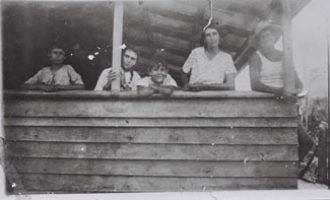
Lawrence Mason has lived at Cape Tribulation all his life. His Grandfather Andy Mason came to Cow Bay in 1929 with his family and two of his brothers, and moved to Cape Tribulation in 1932. The Mason family, including a 4th generation in the form of Lawrence’s daughter, live on the same property to this day. Lawrence is available as a private guide with notice; he has primary care of his daughter, and is not often able to provide service on short notice.
Lawrence began guiding when he was 17 years of age. Back then, a tour with him was half price! His father Paul founded and ran Mason’s Tours until his death in 2005, providing guided walks and 4WD Tours to around 200,000 people. Lawrence took the hard decision to close the scheduled tours in 2011; while wages, insurance and vehicle prices skyrocketed, tour prices were not able to increase.
Lawrence loved guiding though, and decided to continue as a private guide. There are no scheduled tours at all. He now has a 2016 Toyota Hilux, which seats four persons, and offers personalized tours. Lawrence has an amazing knowledge of Natural History, Botany and all things Daintree and North Queensland. Lawrence has been and remains involved in community and panning issues for the Daintree region.
Guided walks up to half day duration are offered on the family property, away from the crowds, and he can offer shorter walks on public boardwalks as well. 4WD experiences are also possible, on the Bloomfield Track, to Bloomfield Falls or further afield to Cooktown.
Lawrence knows many places where guests can join the crowds or escape them. There are Indigenous experiences he can connect with, and places to stay that are unique. Tours can be combined with Helicopter transfers for the adventurous. If you have an idea, just email him and he will respond with suggestions.
All pricing is for the guide for the duration, and does not vary with numbers. The price is the same whether there are one or four guests. He can take more guests on guided walks, please email for details.